
What to expect (and what not to)
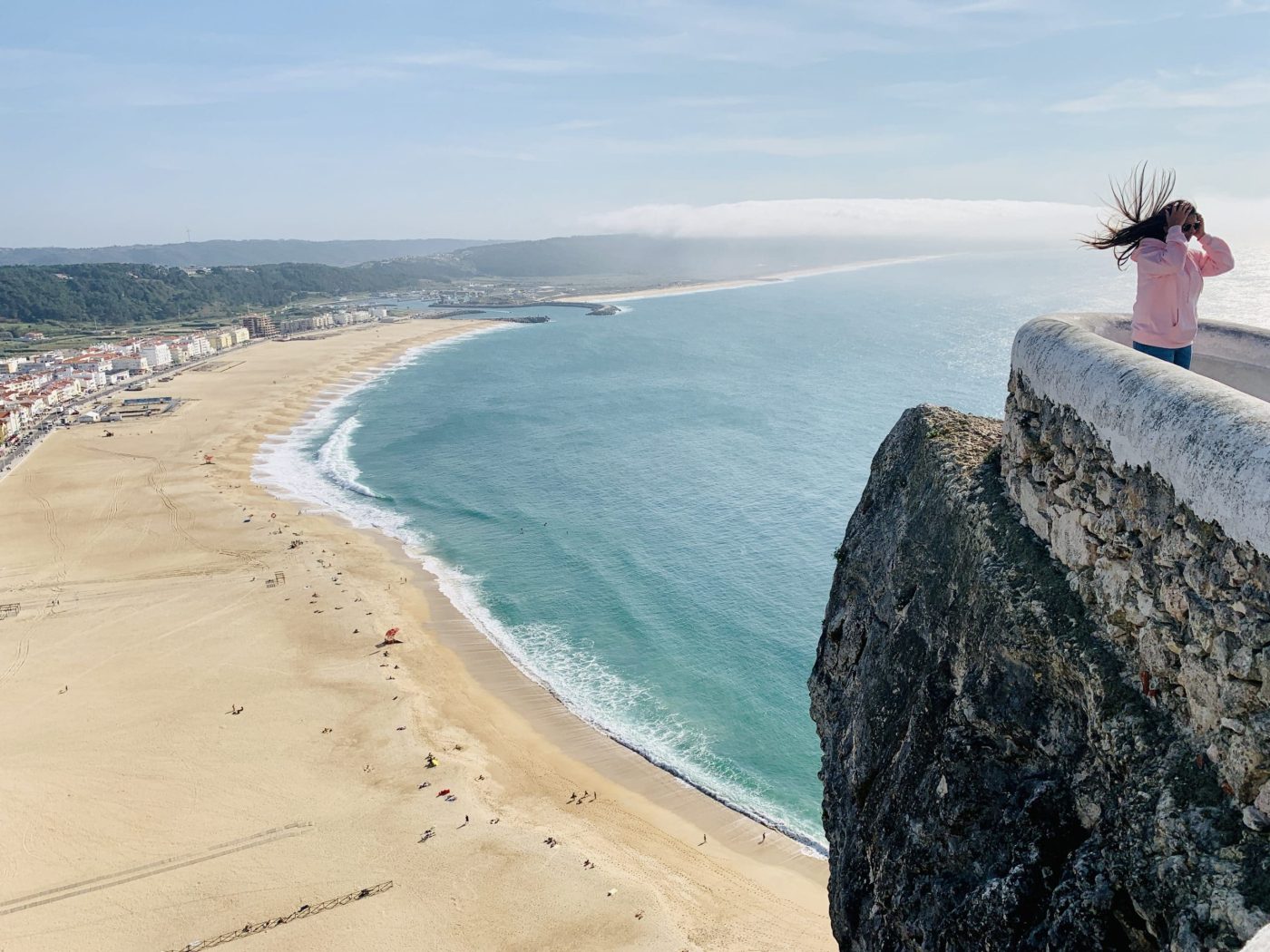
First, the honest bit: Nazaré is not giant every day. The record waves need a serious Atlantic storm lined up just right, and that happens a handful of times each winter. Most days the sea is normal — beautiful, but not the 30-metre monster from the videos.
The good news: even on a flat day, Nazaré is a gorgeous working fishing town with a clifftop old quarter, a 130-year-old funicular and some of the best seafood on the coast. So come with the right expectation — a great trip either way, and a chance at something unforgettable if the forecast delivers.
It helps to understand why the waves get so big here. A deep underwater canyon runs almost to the beach and funnels swell energy onto one focused peak, so Praia do Norte can dwarf the calm town beach on the same day. For the full story, read our Nazaré Canyon guide.
When to come — and how to know it will fire
The big-wave season runs October to March, with the most reliable action from November to February. But the date matters less than the forecast, so plan around the swell.
A month-by-month feel
October and early November are the building phase — the first Atlantic storms arrive with clean, photogenic swells and no deep-winter crowds. December, January and February are the heart of the season: the biggest days land, the pros are in town, and the sea is at its most serious. March tapers off — big days still come, but less often. Come in mid-winter and the odds are firmly with you.
The three tools that tell you it will fire
- Watch the forecast. Check our live 7-day forecast and Big Wave Score — a big day needs a long-period groundswell (14 seconds or more) from the west to north-west, plus light or offshore wind.
- Let us tell you. The window can shift by days. Get the free Wave Alert and we’ll email you when a giant lines up.
- Check the morning of. Open the live webcam before you set off — mornings usually have the cleanest conditions and the best light.
How to actually read a forecast
Three numbers do the heavy lifting. Period is the seconds between waves: short periods (7–9 s) are local wind chop, while a long period (14 s and up) is energy that has crossed the ocean and stands up tall over the canyon — that separates a big day from an ordinary one. Direction should be west to north-west, straight into the canyon, and wind light or offshore to hold the wave face clean. When all three line up, that is Nazaré firing — and the Big Wave Score bundles them into one reading so you do not have to be a meteorologist.
How tow-in surfing works
Watch for a while and you will notice nobody paddles into these waves — they are too fast and break too hard to catch by arm power, so the surfers are towed. A jet-ski driver whips the surfer in on a tow rope, like a wakeboarder behind a boat, so they are already at speed when the wall arrives. The surfer lets go and rides.
The other ski darting around is the rescue ski. The moment a surfer falls, it races into the churning impact zone, the rider grabs a sled on the back, and the driver drags them clear before the next wave lands. It is a two-person team on every wave, and the reason this sport is possible.
Where to stand
There is one clear best spot: the clifftop Forte de São Miguel Arcanjo, with the red lighthouse and a small surf museum. You look straight down onto the break — the safest and most spectacular seat in the house. For a wider panorama over the whole bay, walk the Sítio headland.
Do not go down to the waterline at Praia do Norte. Rogue waves wash the rocks and the beach without warning, and it has cost lives. On a big day, treat the whole beach and every rock as off-limits. More on the viewpoints in our things-to-do guide.
A first-timer’s day (and a two-day plan)
- Arrive early. On a big forecast the clifftop and its car park fill up fast — get there in the morning.
- Ride the funicular up to Sítio, then walk to the lighthouse for the waves.
- Lunch in town — grilled fish and seafood down on the seafront.
- Afternoon: the market, the old quarter and the Pederneira viewpoint over the orange rooftops.
Got two days? Give the waves the morning of whichever day the forecast is bigger and keep the other flexible. If it goes flat, use the second day for the town and a nearby trip — the walled medieval village of Óbidos and the monastery towns of Alcobaça and Batalha are all short drives away. A WSL event is the exception: if the window is green, clear your schedule and stay on the cliff.
What to bring
- Layers. The clifftop is windy and cold even in a sunny south; bring a windproof jacket and a warm layer.
- A zoom lens or binoculars. The action is far offshore; to the naked eye the surfers are specks. The single upgrade that most changes the day.
- Sturdy shoes for the uneven, often wet clifftop paths.
- Sun and rain gear. Winter swings from bright sun to squalls within an hour.
- A power bank. Cold drains phone batteries fast, and you will be filming.
Food and practicalities
Eat down on the seafront: grilled fish and seafood straight off the boats. Order the catch of the day and you rarely go wrong; the traditional dish is fish stewed in a cataplana, and the sun-dried fish racks on the sand are a Nazaré signature. A sit-down seafood lunch is a proper treat, so budget accordingly, but a pastry and coffee in the old quarter keeps things cheap. The funicular, cafés and viewpoints cost little, and the cliff itself is free.
Rookie mistakes to avoid
- Expecting giants on any random day — check the forecast first.
- Climbing down onto the rocks or beach at Praia do Norte.
- Turning up at midday on a big day, when parking is long gone.
- Underdressing — the clifftop is windy and cold even in a sunny south.
- Leaving the zoom lens or binoculars at home; the action is far offshore.
- Flying a drone near the fort — there are no-fly restrictions during events.
- Booking non-refundable dates weeks ahead and hoping — the swell decides, not the calendar.
Getting here and where to stay
Nazaré is about 1.5 hours from Lisbon — see the full getting-there guide for car, bus and train. For a room within walking distance of the cliff, browse our hand-picked stays, and book one with free cancellation in case the swell shifts. Chasing a specific contest? Check the events page, and our Hall of Fame tracks the record rides.
One last thing: check the forecast and grab the Wave Alert before you lock in dates — timing is everything here.