
Where to fly
Lisbon (LIS) is the main gateway and the one we point most visitors towards: it is roughly 1.5 hours from Nazaré, it has the widest choice of flights, and every onward option starts cleanly from there. Porto (OPO) works as an alternative, especially if you find a better fare or you are combining Nazaré with the north of the country, but it sits further away at around 2 hours by road, so the connections are longer and there are fewer of them.
Our simple rule: fly into Lisbon unless a Porto flight is clearly cheaper or more convenient for the rest of your itinerary. If you are pairing your travel with a swell window, it is worth glancing at the forecast before you lock in dates, because the biggest days draw crowds and fill the town fast.
From Lisbon by car
The quickest and most flexible option: roughly 1 h 30 up the A8 motorway. Tolls run about €4.85–7.05 depending on the route and are collected electronically (Via Verde), so ask your rental company for a transponder. Cars can be picked up at Lisbon airport from around €10 a day.
That electronic-toll point matters more than most first-timers expect. Portugal’s motorways have no toll booths to pay at; the gantries read your transponder and bill the car automatically. If your rental has no Via Verde device fitted, or you drive your own car without registering, the unpaid tolls turn into fines that catch up with you later — so confirm the transponder is in the car before you leave the airport, and keep the rental paperwork.
A car is the best choice if you want to chase the swell across several days: forecasts shift, the wind can favour a different stretch of coast one morning to the next, and your own wheels let you be at the viewpoints for first light or move to a neighbouring break. If that is your plan, read our first-time guide for how the big days actually unfold, and check the webcam before you set off.
From Lisbon by bus — the easy choice
For visitors without a car this is what we recommend: cheaper than renting with fuel and tolls, and only about 20 minutes slower than driving. Rede Expressos runs from Sete Rios in about 1 h 50 — roughly €10.80, with about five departures a day (09:00–20:00). There’s also a daily service from Oriente from €6. It drops you near the seafront; the last bus back from Nazaré leaves around 18:40.
FlixBus also serves the corridor on some days and is worth a price check alongside Rede Expressos, though schedules are thinner. Both are comfortable, air-conditioned coaches, and because they set you down close to the beach you can walk straight to most stays without a taxi.
The one caveat to plan around is that last bus back at roughly 18:40. If you are visiting for a single big day and hoping to catch the late-afternoon sets, you may run out of return connections — so either build in an overnight or check the day’s times carefully.
From Lisbon by train
There’s no station in Nazaré itself. Trains run via Caldas da Rainha to Famalicão da Nazaré, about 8 km out, from where a short bus or taxi finishes the trip. At 3 hours or more (around €9.65) it’s the slowest option — for most people the bus is the better choice.
Being honest about it: the train is the slowest way in, and the change at Famalicão adds a fiddly final leg with luggage. It still makes sense in a couple of cases — if you simply enjoy rail travel, if you are already on the line coming from another town, or if the bus times do not fit your day. Otherwise, treat it as the backup rather than the plan.
From Porto
About 2 hours by car, though tolls are steeper — around €17.20 each way. By coach it’s 2 h 45 to 4 h depending on the connection, from about €5, leaving Campo 24 de Agosto and dropping near Praia da Nazaré.
If you have flown into Porto (OPO), the same electronic-toll rules apply to the drive south, so the Via Verde advice above holds. The coach from Campo 24 de Agosto is the low-cost route, but the wide time band means it pays to compare the direct services against the ones that route through an interchange.
Private transfer or taxi
For groups, families with gear, or anyone landing late when the coaches have stopped, a private airport transfer or taxi is the door-to-door answer. You are met at arrivals and driven straight to your accommodation in Nazaré, with no changes and no timetable to catch. It is the most expensive option per trip, but split between three or four people with boards and bags it often compares well with two rental days plus fuel and tolls.
Book it in advance for a fixed price and give the driver your accommodation address so you are dropped at the door — the natural choice if your flight lands after the last bus back at ~18:40.
Getting around once you arrive
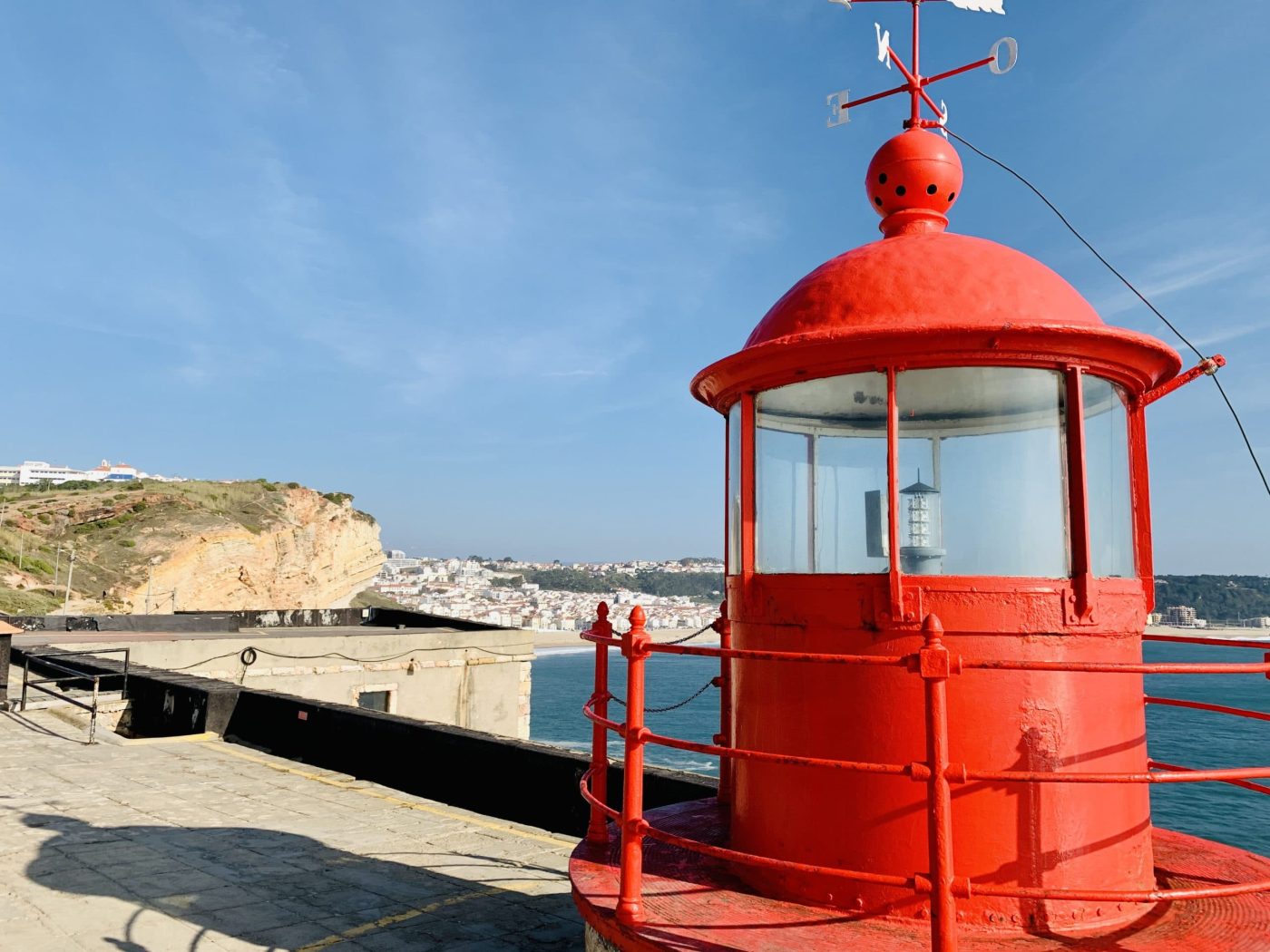
Nazaré is small and walkable, so once you are in town you rarely need a car for day-to-day movement. The historic Ascensor (funicular) links the beach to the clifftop district of Sítio, climbing about 380 m for €1.50 one-way / €2.90 return. From the top you reach the lighthouse and the big-wave viewpoints over Praia do Norte, where the famous winter sets are watched from.
On a big forecast day the town fills up fast: the clifftop car park and the streets around Sítio can be full by mid-morning, so arrive early, leave the car below and take the funicular or walk up. Our first-time guide covers the timing of the crowds in more detail, and there is plenty beyond the waves — see things to do and the events calendar if you are building out the rest of your stay.
Prices and timetables change seasonally — check the operators before you travel.
Which option is right for you
- Car — best if you want to chase multiple swells, be at the viewpoints for first light, or move between breaks on your own schedule.
- Bus — the sweet spot if you are car-free and budget-minded; comfortable, cheap and drops you near the beach, just mind the last bus back.
- Train — only if you love rail travel or are already on the line; it is the slowest way in.
- Private transfer or taxi — ideal for groups, lots of gear, or a late arrival after the coaches have stopped.
Whichever you pick, line your dates up with the forecast and the webcam so you arrive when the ocean is doing something worth the journey.